
What Delhi NCR's Monsoon Actually Does to Your Wood Furniture (And What Genuinely Helps)
Team Wood Glazer
Published on 7/2/2026
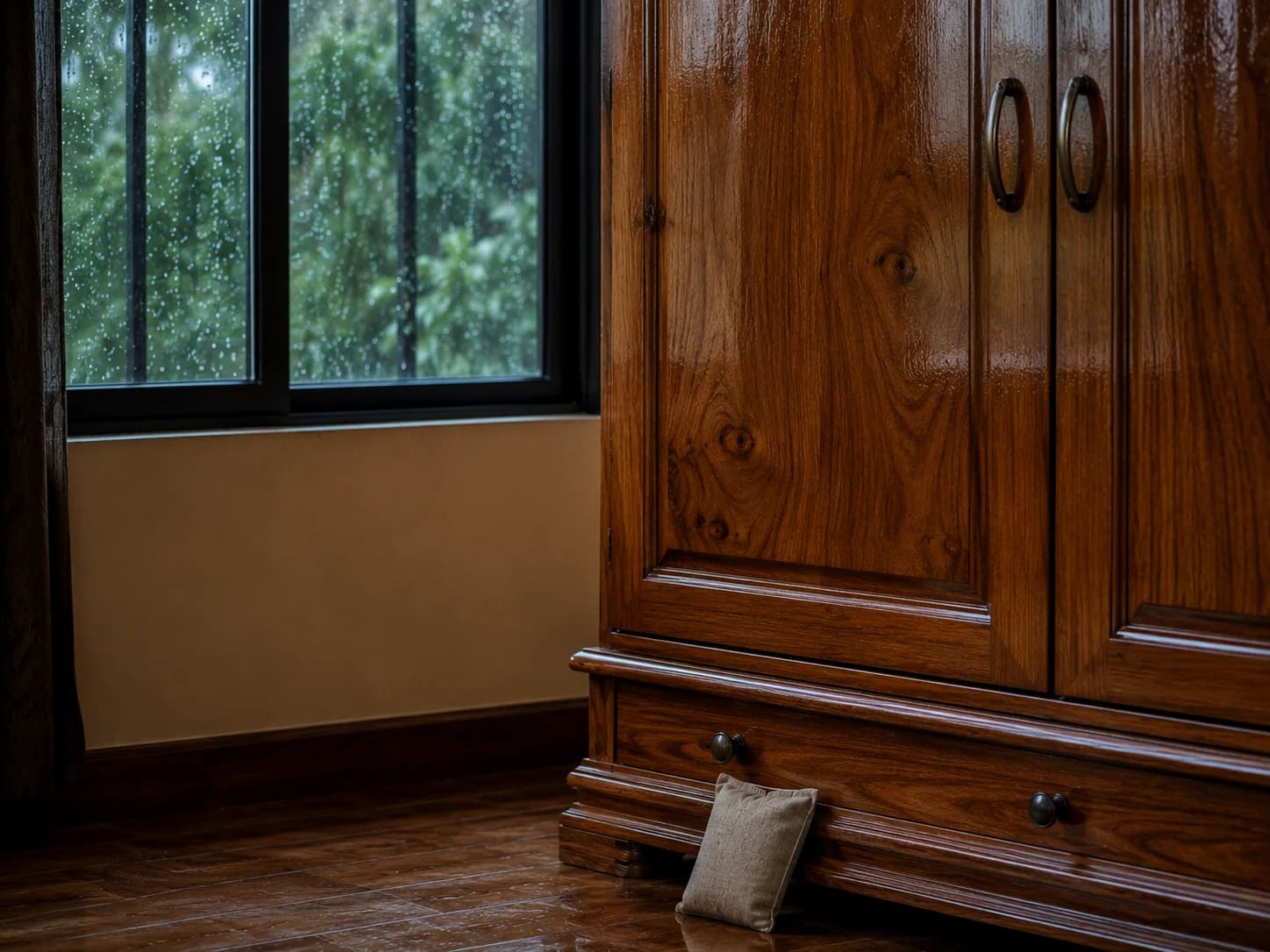
It comes every July: someone complains about their wardrobe not closing as well as before or observes a pale bloom slowly forming on the back of some cabinet no one has touched in weeks. In most cases, it's always the same thing: humidity from the monsoon season finally taking its toll on unprepared wood.
If you have ever lived in any part of the region ranging from Faridabad, Ballabhgarh, Gurgaon, Noida or South Delhi, you will be familiar with how hard this time of year is for wooden furniture. The reason behind it may not be clear to everyone though, and neither is what can be done about it besides the common “dry wipe” method.
Why Wood Reacts So Badly to This Season Specifically
Wood is hygroscopic in nature, which means that it behaves like a sponge. Wood draws moisture from humid air, and releases it once it loses moisture into dry air. For the most part of the year, the process is gradual. However, in monsoon season when the relative humidity in Delhi NCR touches 70% and stays there for weeks, the process accelerates rapidly.
The wood swells. The doors get stuck. The drawer joints become tight. And in some extreme cases where corners have low air flow, you begin to see signs of fungal infestation, that is, green patches appearing on the back panels of your wardrobes or behind the furniture items placed directly against the wall.
The part that people miss is that the damage isn't caused by one rainy day; it is caused by the constant swelling and shrinking of wood due to cycles of rains and dryness after.
The Early Signs Worth Watching For
You don't have to wait for your doors to stick before knowing that there's a problem. Watch out for:
The appearance of a duller finish on the polish that used to be glossy
Difficulties in opening or closing doors and drawers
The presence of white, green, or brown spots in corners, joints, and the backs of cabinets and enclosures
An odd odor emanating from wardrobes and cabinets – it is always the first sign of the presence of termites
Dust or sawdust appearing around the legs of the furniture, and it indicates the presence of termites rather than moisture
When inspecting the furniture just once a year, you should really do it just before or after the monsoon season.
What Actually Helps (Beyond the Usual Advice)
Articles related to this topic only mention maintaining humidity between 45% and 55%, using a dehumidifier, which is right, but not very feasible when you aren’t using a dehumidifier in every room of your house in Delhi NCR.
Here are a few points that really matter:
Finish does matter more than one thinks. The right finish will give a waterproof coating to the surface and hence PU polishing is recommended for furniture that is to be placed in areas where there is more moisture such as window corners or kitchen. Melamine polish looks great and is slightly more economical but is less forgiving when it comes to high humidity. In case one is planning to polish their furniture before the onset of the monsoons, it must be kept in mind where that particular piece is to be kept at home.
The flow of air past furniture pieces is underestimated. Having furniture placed at an inch or two away from the wall allows for airflow behind them, reducing the very conditions mold requires to thrive. This is free of cost and usually forgotten about.
Silica gel packets within enclosures like wardrobes, drawers, and cabinets really do work in absorbing the moisture retained inside the furniture piece that the outside cloth cannot access.
Avoid using the plastic sheets. Plastic sheets are the usual choice when it comes to protecting furniture from rainwater, but the condensation beneath the plastic sheet causes more damage than anything else.
Polishing Before Monsoon vs. After — Which Actually Matters More?
Both indeed, although for very different reasons.
Pre-monsoon (by June at the latest): a new layer of polish acts as a seal on the wood even before the humidity level rises. This is all about prevention, which is easier and cheaper than repairs.
Post-monsoon (September): this is the time when you see the real damage done. If the wood has swollen, it would have already leveled out at this point, so it is a good idea to smooth out any rough surfaces, fill any newly formed cracks, and apply another layer of polish.
If you can afford only one session per year, preventive actions prior to the monsoon season definitely make more sense than fixing the consequences after that.
When It's More Than a DIY Wipe-Down Job
Weekly dusting and maintaining a good distance between your furniture and the walls is sure going to add to the life of your finish. However, there is one place where home maintenance just isn’t going to be sufficient anymore:
When there is visible dullness or peeling off in patches of your polish
When a particular door/drawer is not closing after two or three weeks of usage
In case you observe termite infestation (this one surely can't be delayed)
If it has been 2-3 years since the furniture has received any professional polish (average life of a finish under Faridabad NCR climatic conditions)
The right approach at this point would be to have a complete re-polish done – which includes stripping of the old finish, sanding and filing up any cracks and then applying new PU/melamine coat. This phenomenon is often observed in our Faridabad and Greater Faridabad clients, where old furniture which has never been professionally polished is the worst affected during monsoons.
A Quick Answer to the Question We Get Most
"Do I simply have to polish it myself using a commercial product?" You can, but that does not negate the need for a re-polish, because that process includes sanding, filling cracks, and applying several layers of coats. It’s touch-ups vs. a real re-polish, both valid, but not one and the same.
Common Questions
How frequently is it recommended to polish wood furniture in the climate conditions of Delhi NCR?
On average once every 2-3 years for furniture that is used normally, however, items which are subject to increased wear (for example, kitchen cabinets) require polishing slightly earlier due to additional exposure to moisture and heat.
Is there any connection between the humid weather during the monsoon season and the appearance of termites?
There is. High humidity creates favorable conditions for attracting termites and a couple of months after the start of monsoon season their damage can become visible if nothing was done about the increased humidity.
Which polish – PU or melamine is better for monsoon season?
If the furniture item will be located in the place with increased moisture level then PU polish is better. If the location is relatively dry with good ventilation then melamine polish will do well.
When is it time to think about furniture re-polishing?
The first signs of such necessity are loss of shine and some dullness of the surface of the item.