7 Signs Your Wooden Furniture Needs Repolishing (And How Often You Really Need It)
Team Wood Glazer
Published on 7/3/2026
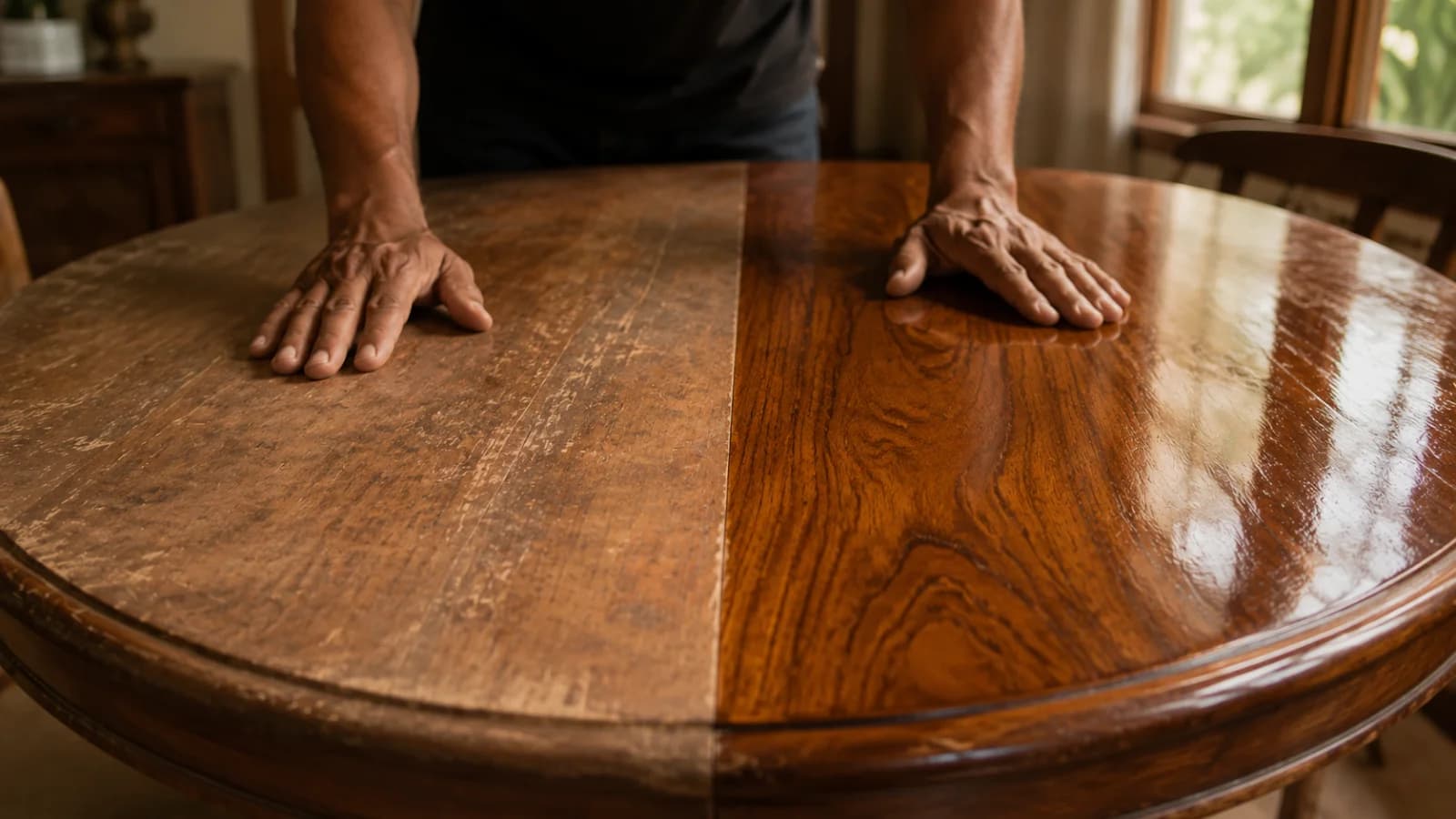
Wooden furniture is unlikely to go kaput completely. There is that dullness in it each passing year – perhaps a faded gloss somewhere, or water marks elsewhere – when you wake up one morning and find a cupboard or a dining table that you have been using for years looking old without really knowing why. This is precisely why people tend to postpone having their furniture repolished until too long.
Delhi NCR's weather conditions make this problem even more pronounced. The summers are so harsh that the wood along with the polish on it gets dried, while the monsoons cause swelling and warping. Dust of Delhi NCR gets accumulated in every little crack of the deteriorated polish layer. If you know what signs to look out for, then you will be in a better position to have your furniture repolished on time.
1. The Luster Is Reduced To a Lifeless One
Perhaps the most apparent one would be the easiest one to overlook simply because it takes place slowly. New polish, be it PU, melamine, or duco, is shiny when it comes to reflecting light. Over time, as the thin layer on the surface wears off due to dusting, sun exposure, and general usage, the reflectivity becomes dull.
2. Surface Scratches, Marks, and Fine Cracks
Surface scratches are initially cosmetic, but they are also tiny cracks in the protective polish surface. Because dust and water penetrate through the cracks much quicker than through a smooth surface, furniture that has visible scratches usually wears out faster than one without any.
3. Water Rings or Cloudy White Stains
This cloudy white circle formed from using a glass or a mug is not just any stain but moisture that has seeped through the protective layer of polish and settled below the surface. If left as such, especially in the humid monsoon season in Delhi NCR, the moisture could expand and eventually damage the wooden surface beneath.
4. Peeling, Flaking, or Bubbling of the Polish
It is another advanced stage warning that should not be neglected. If polish starts to peel off, flake off its edges, or bubble up, then it means that the coating itself has undergone structural failure and has ceased to exist in the particular area, exposing the bare wood below, without any kind of protection until it is reapplied.
5. Color Fading or Tone Variation on the Surface
The color of furniture kept close to windows or in sunlight tends to get uneven over time. The part of furniture kept in shade becomes darker in color, while the portion exposed to sunlight turns light in color. It is important to note that this color variation takes place in the polish layer long before it affects the actual wood.
6. Rough/Sticky Touch instead of a Smooth Touch
Rub the surface with your fingers to check whether it is smooth. An ideal polish surface is always smooth. If you feel the surface is rough, gritty, or sticky here and there, this indicates degradation of the finish, which occurs due to years of exposure to cleaning materials, humidity, or old coatings.
7. Odor of Mold Or Early Indications of Mold Formation
In the monsoon period in Delhi NCR region, a perfect polish coating prevents any moisture from entering the wood. Once this barrier breaks down, the wood will begin to absorb moisture, resulting in a mild odor of mold or some small dark patches, which later develop into the formation of molds.
How Frequently Should Your Wooden Furniture be Re-Polished?
There is no standard time limit but as a rough guide in Delhi NCR:
Furniture that gets maximum usage (tables, main door, office desk): Every 3-4 years
Furniture of medium usage (cupboard, bed room furniture): Every 5-7 years
Minimum use or decorative items: Every 7-10 years, or when any of the above symptoms appear
Furniture that has been exposed to direct sunlight, has been placed in proximity to the kitchen, or is being used by children will need repair sooner than those specified above.
Which Should I Choose? PU Polish, Melamine, or Duco?
If you are going through the trouble of repainting your furniture, it is essential to understand what you are actually getting into because there is no one-size-fits-all when it comes to furniture finishes.
PU (Polyurethane) Polish — a tough, non-reflective surface polish that showcases the beauty of natural wood grain and which is ideal for furniture in use because it provides more resistance to scratches and moisture compared to other options.
Melamine Polish — a traditional, glossy polish that works best on wooden furniture providing a natural finish, however, not as scratch-resistant as PU.
Duco Paint — a colored surface treatment, either matt, glossy, or high-gloss depending on the desired effect.
If you want to know what sort of finish is required on the particular piece of furniture based on its wood type, use pattern, and design, you need an expert wood polishing inspector – it’s quite difficult to do by looking at pictures or reading general guides online.
Why Expert Inspection Is Better Than DIY Repair
Of course, it's always tempting to patch up the scratch yourself or give it some extra varnish, but the signs described above usually mean deeper damage than just what you can see on the surface. The wood polishing expert will remove the old finishing layer properly, sand and even out the surface, fill in the cracks and dents using matching filler, and put on the new finishing layer in several layers. This process cannot be reproduced DIY-style.
Every Project Approach of Wood Glazer
With more than 30 years of wood carving and polishing expertise from Faridabad to Gurugram, Noida, Greater Noida, and South Delhi, our craftsman always begin every project by conducting an inspection free of cost to ascertain wood quality, wood condition, and correct finish based on its usage.
Questions
Question 1: When should I go for a repolish rather than replace?
If your wooden structure remains structurally stable without signs of rotting, warping or any other types of damage and there are only finish problems (such as dullness, scratches, or peeling), then repolish is always the better choice.
Question 2: Can I use the repolish method to restore furniture from water damage?
Usually, surface rings, water rings and cloudy spots can be entirely restored in the process of repolish. In case water damage got inside the wood, you will probably need some additional restoration work before starting the repolish.
Question 3: Is PU polish better than melamine polish?
No. These polishes are just different. PU polish is more durable and has higher scratch resistance compared to melamine polish, but melamine polish is known for its glossiness. Your choice depends on the type of furniture and its use.
Question 4: How long will it take to repolish my wooden furniture?
The time required to complete the work depends on such factors as the number of pieces of furniture, its condition, and the type of the finish you choose. Our expert will estimate the time after inspecting your furniture.